ou find a crochet pattern you love, choose your yarn, pick up your hook and start reading through the instructions. Everything seems straightforward — until the stitches don't appear to be producing anything like the photograph.
One possible culprit is surprisingly simple: the pattern is using a different set of crochet terminology.
Crochet patterns written in the UK and US can use the same stitch names to mean completely different stitches. Whether you've only recently discovered crochet or have been crocheting for years, it is something worth checking whenever you begin a new pattern.
Why Are UK and US Crochet Terms Different?
UK and US crochet terminology developed using different systems for naming stitches.
The confusing part isn't simply that different words are used. In some cases, exactly the same term means a different stitch.
For example, a double crochet in UK terminology is not the same stitch as a double crochet in US terminology.
Fortunately, once you understand the relationship between the two systems, translating between them becomes much easier.
The Crochet Terms You'll See Most Often
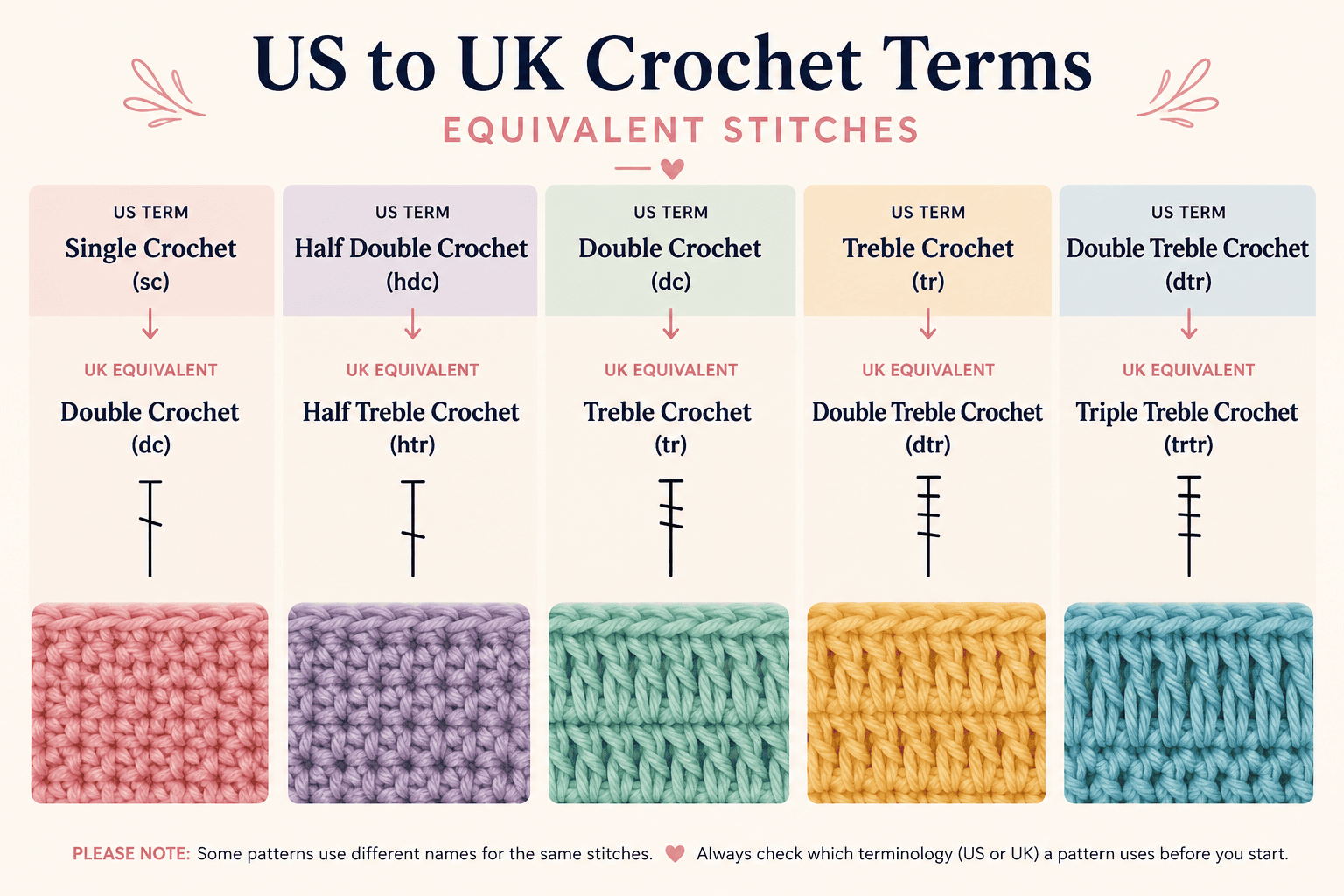
Here are some of the common equivalents:
| UK Term | US Term |
|---|---|
| Double crochet (dc) | Single crochet (sc) |
| Half treble crochet (htr) | Half double crochet (hdc) |
| Treble crochet (tr) | Double crochet (dc) |
| Double treble crochet (dtr) | Treble crochet (tr) |
| Triple treble crochet (trtr) | Double treble crochet (dtr) |
Some terms, including chain (ch) and slip stitch (sl st), are generally the same in both systems.
This means you don't necessarily have to rewrite an entire pattern when working from unfamiliar terminology. Once you know which system is being used, you can translate the stitches as you work.
How Can You Tell Which Terminology a Pattern Uses?
Well-written patterns will usually tell you whether they use UK or US crochet terminology, often near the beginning of the pattern.
But that isn't always the case, particularly with older patterns, patterns found online or those shared between crocheters.
There are a few clues you can look for.
If the pattern contains single crochet (sc), it is using US terminology because there is no single crochet stitch in standard UK terminology.
You can also look at the country in which the pattern was published, although don't rely on this alone. Crochet designers and publishers increasingly have an international audience and may choose either system.
The stitch descriptions, photographs and finished appearance can provide further clues if you're still unsure.
Why the Difference Matters
Using the wrong terminology can dramatically alter your finished crochet.
Imagine a pattern that asks you to work a UK double crochet. If you interpret that as a US double crochet, you'll make a considerably taller stitch than the designer intended.
Repeat that across an entire project and your tension, dimensions, yarn usage and overall appearance can all change.
If something seems strangely wrong with a project, checking the terminology is therefore a useful troubleshooting step before assuming that you've misunderstood the pattern.
What About Crochet Hook Sizes?
Terminology isn't the only difference you might encounter in patterns from different countries.
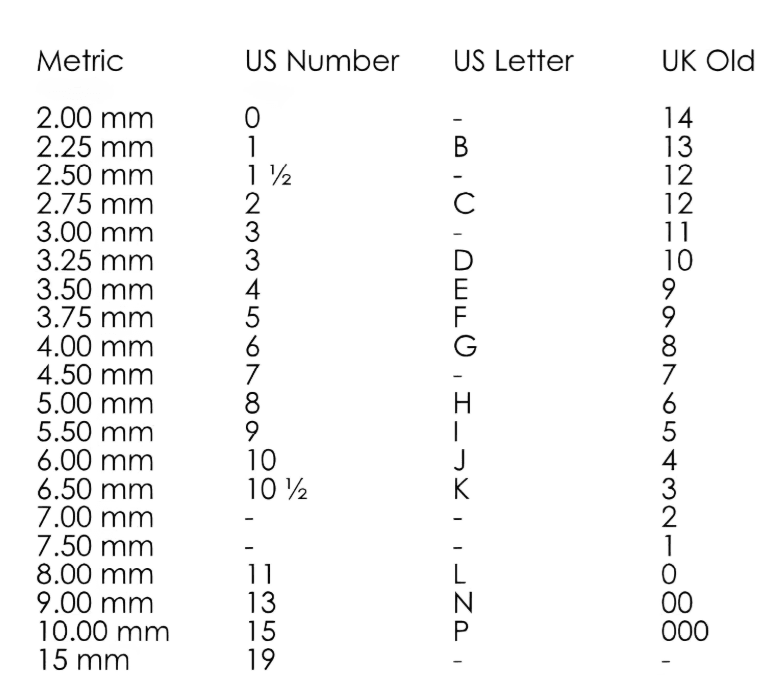
UK crochet patterns generally give hook sizes in millimetres, such as 3.5 mm, 4 mm or 5 mm.
US patterns often use letters and numbers to describe hook sizes instead.
For example, you might see a US H/8 hook where you're more accustomed to seeing 5 mm.
Modern hooks often have both systems printed on them, but a conversion chart can be useful when working with older hooks or patterns.
Yarn Terminology Can Differ Too
This is where working with international crochet patterns becomes slightly more interesting!
Descriptions of yarn weights aren't identical between countries either.
Terms such as DK, aran, worsted, 4-ply and fingering may appear depending on where a yarn or pattern originates.
Rather than relying only on the name of the yarn weight, look at the information supplied in the pattern, including recommended hook size, tension or gauge and the yarn's length and weight.
If you're substituting yarn, making a tension square becomes particularly useful.
Should You Translate the Whole Pattern?
You can, but you don't necessarily need to.
For a pattern containing only a few different stitches, it can be easier to write yourself a small conversion note and keep it beside you.
For example:
Pattern says UK tr → I work US dc
This is particularly helpful if you're used to one terminology system and instinctively associate a stitch abbreviation with a particular movement.
For a more complicated pattern, you might prefer to annotate your copy before beginning so that you aren't continually stopping to translate.
Charts Can Make International Patterns Easier
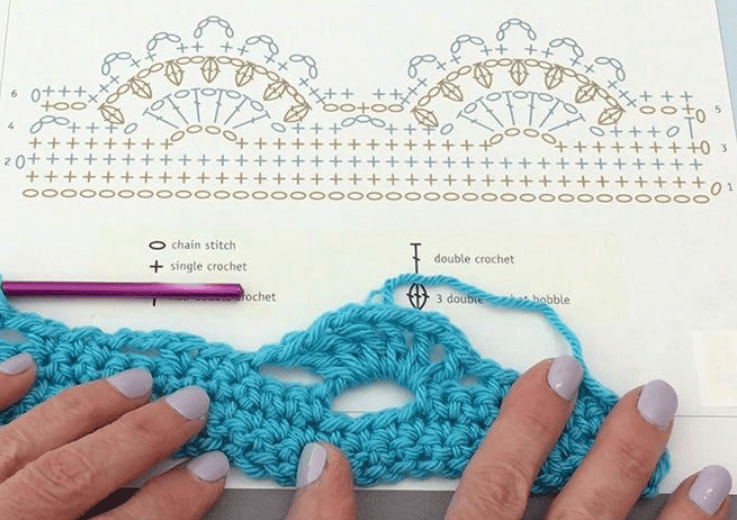
Crochet charts have a considerable advantage here because the symbols represent the structure of the stitches rather than relying solely on written terminology.
Once you're comfortable reading crochet charts, they can make working with patterns from different countries much simpler.
They are also particularly useful for visualising stitch placement, repeats and more complicated constructions.
Learning to read both written instructions and charts gives you access to a much wider range of crochet patterns.
Don't Let Different Terminology Limit What You Make
Discovering that there are two crochet terminology systems can initially seem unnecessarily complicated, but it soon becomes another part of understanding the craft.
You don't need to memorise every conversion.
What matters is developing the habit of checking which terminology a pattern uses before you begin.
Once you can recognise and translate the differences, patterns written on either side of the Atlantic become much more accessible — which means a lot more crochet possibilities to explore.